One or two sentences.
A small helper, to_cb(), prints R output and puts the same text on your clipboard. Here is what you need to make it available everywhere, and how that changes in an existing project versus one started with toolero.
A practical guide to starting a research coding project with a structure that can grow from local exploration to reproducible analysis, containerized execution, and high-throughput computing. Part 0 of the “From the Notebook to the Cluster” series.
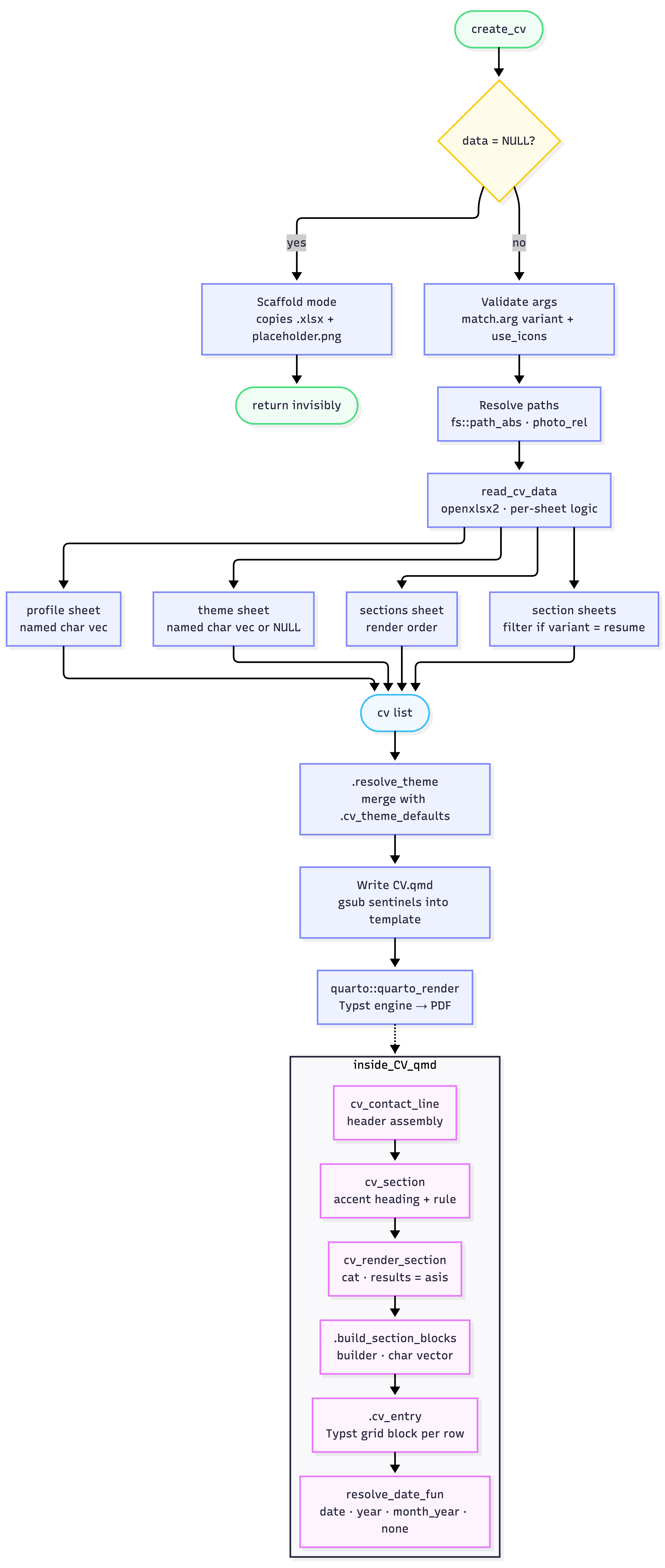
A look at how curriculr separates CV content from layout, letting a single Excel workbook drive a polished, Typst-rendered document through Quarto.
A practical guide to starting a research coding project with a structure that can grow from local exploration to reproducible analysis, containerized execution, and high-throughput computing. Part 0 of the ‘From the Notebook to the Cluster’ series.
You can make your plots more accessible by adding alt-text via the code block option #| fig-alt:
#| fig-alt:
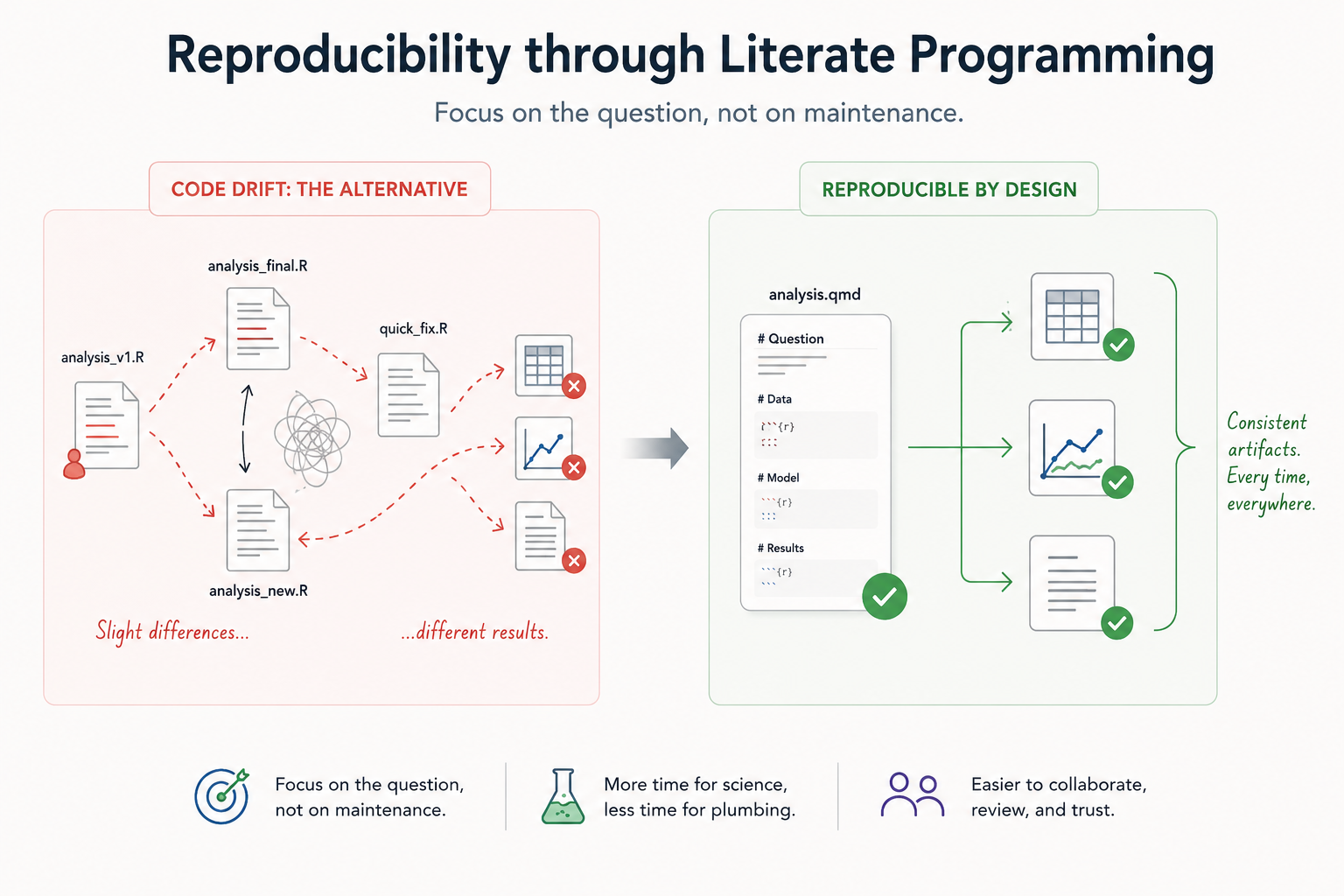
Code drift — the quiet divergence between what you report and what you actually ran — is one of reproducibility’s most common and least visible failure modes. This post introduces a workflow built on three toolero functions that address drift structurally: a scaffold that doubles as a maintained source, a context-detection utility that replaces informal path patches, and a post-render hook that derives the submission script automatically.
An R package for producing data-driven CVs and resumes. You maintain your content in an Excel workbook; curriculr reads it, converts it to Typst layout blocks, and renders a polished PDF via Quarto. No LaTeX required.
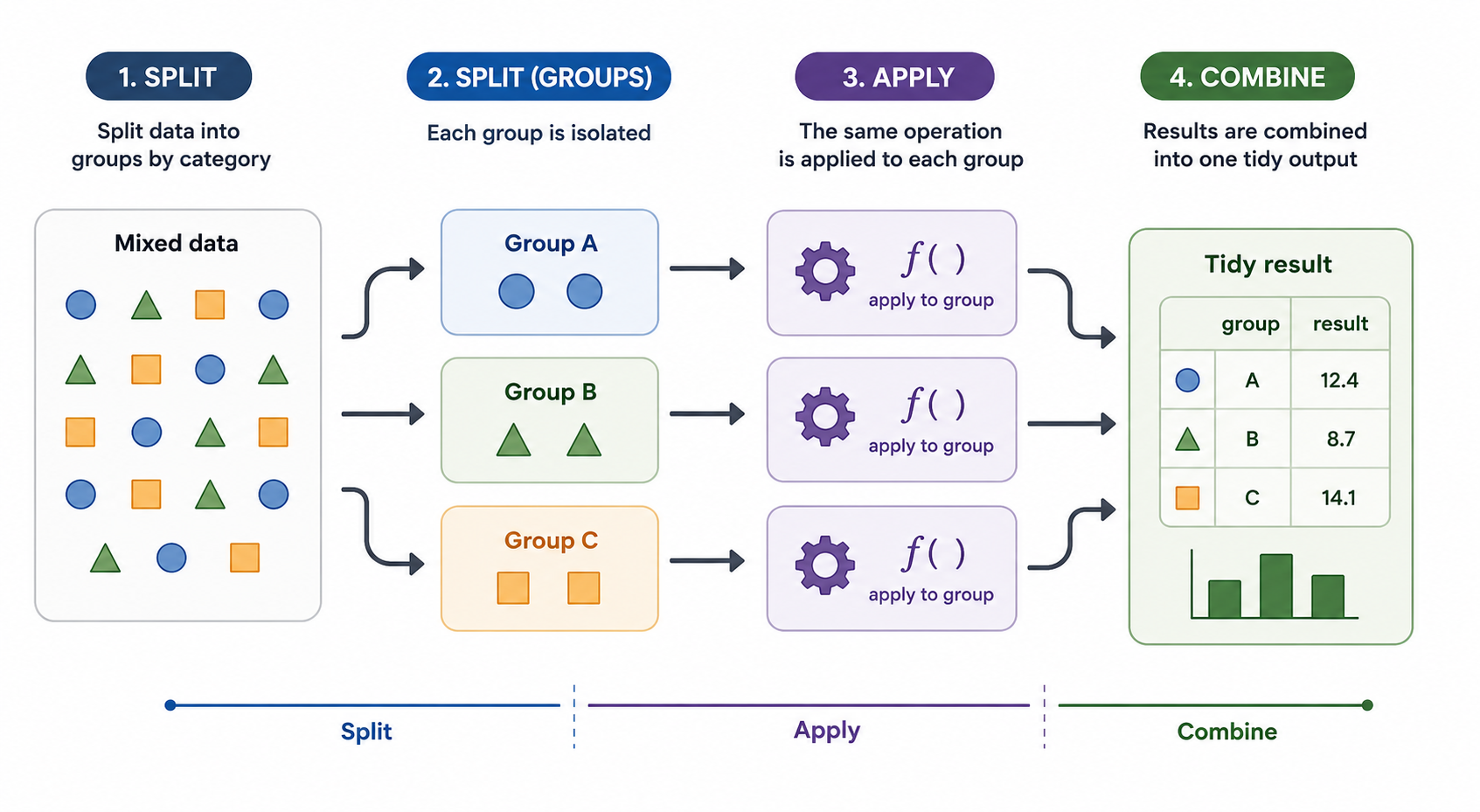
A walkthrough of six approaches to the split-apply-combine pattern in R, from explicit column-by-column summaries to parallel execution with furrr, using the Palmer Penguins dataset as a running example.